Why “Specialty Coffee” Actually Matters
If you live in Canada—especially Toronto, Vancouver, Montreal, Calgary—you’ve probably noticed the surge of cafés and roasters proudly calling their beans specialty coffee. But the term is often misunderstood.
- Specialty coffee isn’t marketing fluff.
- It isn’t a trendy label.
- It isn’t “any coffee that tastes nice.”
Specialty coffee is a strict global standard, graded and certified through a scientific process, built on traceability from farm to cup, and produced through meticulous craftsmanship at every step—farming, picking, processing, roasting, and brewing.
This guide breaks down what specialty coffee truly means and how Canadians can choose the best beans confidently.
The Foundation: What Exactly Is Specialty Coffee?
Specialty coffee refers to beans that score 80 points or higher on the SCA (Specialty Coffee Association) grading scale—a globally recognized evaluation framework.
How scoring works (SCA Scale: 0–100)
Professional Q-graders evaluate coffees across multiple attributes:
- Fragrance & Aroma
- Flavor
- Aftertaste
- Acidity
- Body
- Balance
- Sweetness
- Uniformity
- Clean Cup
- Overall Impression
What the scores mean
- 80–84.99 → Very Good Specialty Coffee
- 85–89.99 → Excellent Specialty Coffee
- 90+ → Outstanding / Rare (extremely limited lots)
In everyday terms:
Specialty coffee is the top 5–8% of global coffee production.
This quality threshold ensures that when you buy specialty coffee in Canada, you’re drinking beans that meet international standards—not subjective preferences.
Origin Integrity: Traceability Makes It “Specialty”
A supermarket bag never tells you:
- Who grew the coffee
- At what elevation
- How it was processed
- What variety it is
- Whether it’s hand-picked
- Whether farmers were paid sustainably
Specialty coffee must have origin transparency.
This means you should know:
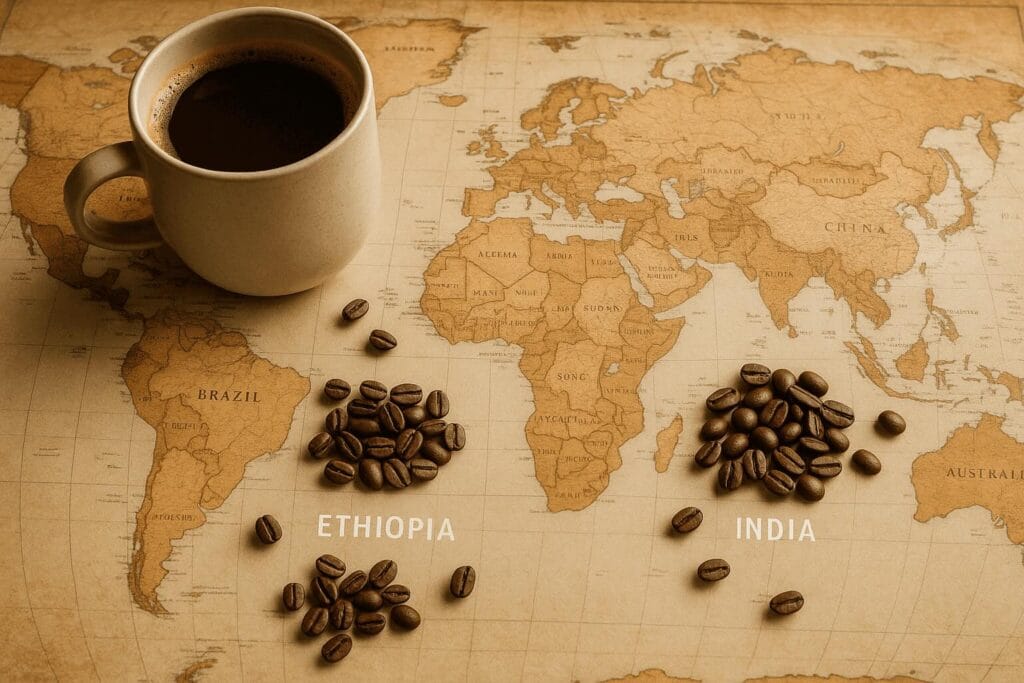
- The Country
(e.g., Ethiopia, Brazil, India, Yemen, Colombia) - The Region
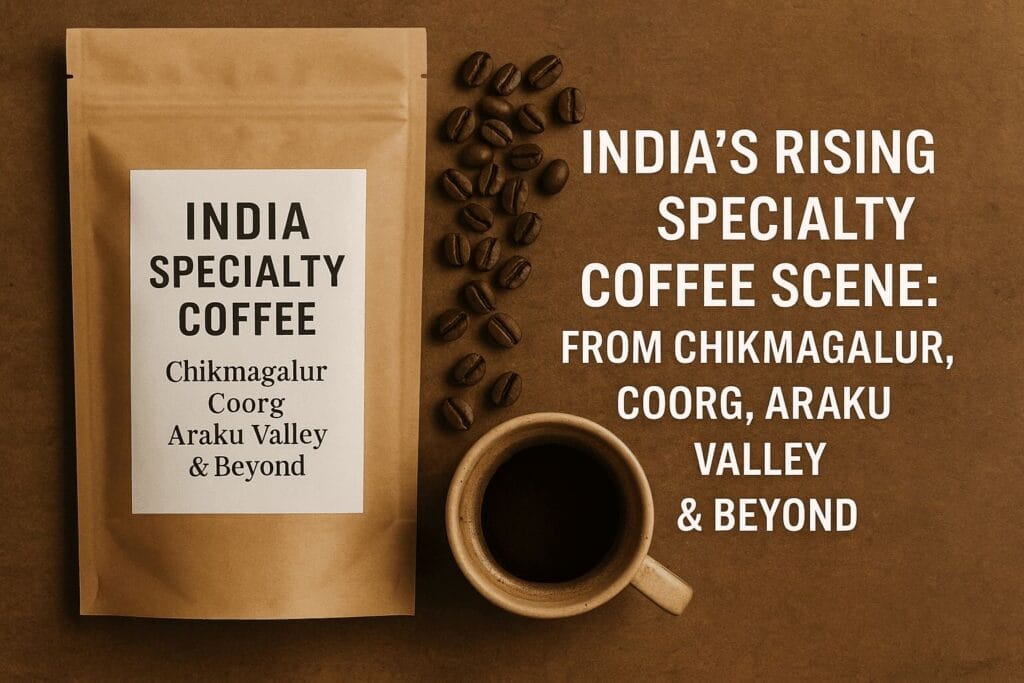
(e.g., Sidamo, Coorg, Chikmagalur, Huila) - The Farm or Cooperative
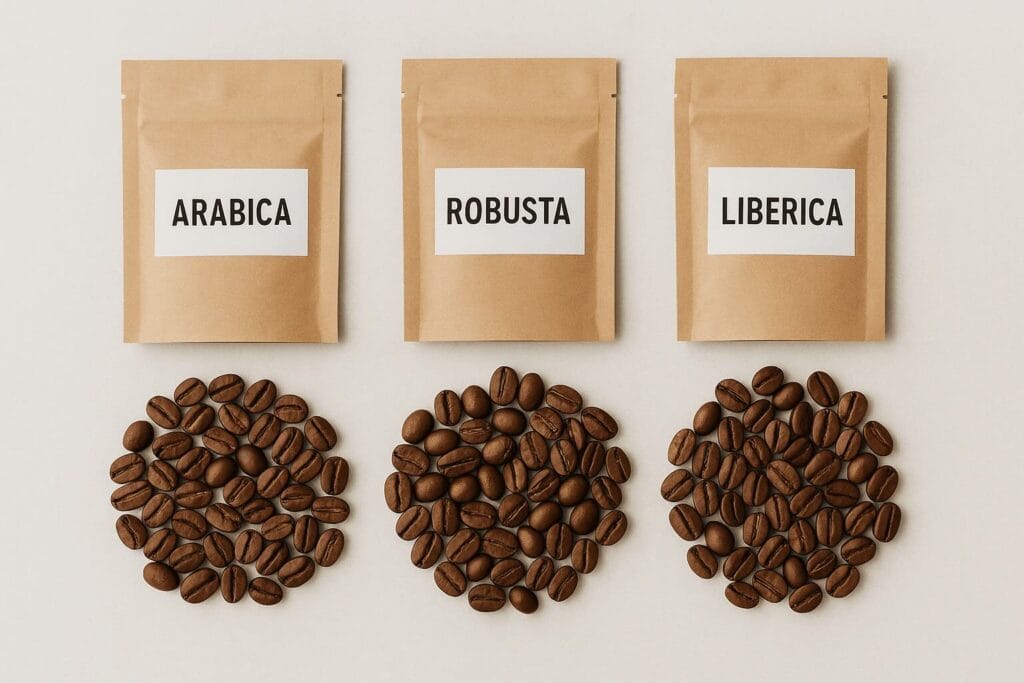
(e.g., women-produced lots, heritage estates) - The Coffee Variety
(e.g., SL28, Heirloom, Catuaí, Bourbon, Robusta AAA) - The Altitude / Elevation
Higher elevation = slower ripening = sweeter, more complex beans. - The Process Method
Washed, Honey, Natural, Monsooned, Anaerobic, Swiss Water Decaf, etc.
If the coffee you’re buying doesn’t show this information, it is not specialty coffee—regardless of what the label claims.
Processing Matters: How Beans Are Treated After Harvest
Processing dramatically changes flavour. Specialty coffee often uses advanced or labour-intensive methods.
- Washed Process
Clean, bright, consistent flavour.
Used widely in Colombia, Kenya, and India. - Natural (Dry) Process
Fruit-forward, sweet, winey.
Signature of Ethiopia, Yemen, Brazil. - Honey Process
Balanced sweetness + clarity.
Popular in Costa Rica, El Salvador. - Anaerobic & Carbonic Maceration
Experimental, intense fruit flavours.
Trending heavily in competition-grade coffees. - Monsooned Process (Unique to India)
Exposed to monsoon winds → low acidity, bold, earthy.
Used for Monsooned Malabar. - Swiss Water Decaf
Chemical-free, flavour-preserving decaffeination.
These processes determine whether a coffee qualifies as specialty—not all methods meet the cleanliness and quality required.
Roast Quality: Specialty Coffee Requires Skill, Not Guesswork
Roasting specialty-grade beans is a technical skill.
Roasters must:
- Control temperature curves
- Track development time
- Preserve inherent flavours
- Avoid scorching, tipping, baking, or underdevelopment
General rules:
- Light roasts → Highlight origin flavour (fruity, floral, bright)
- Medium roasts → Balanced sweetness, acidity, and body
Signature / Medium-Dark → Perfect for espresso lovers (crema, richness, low acidity)
Specialty coffee is roasted to reveal flavour—never to mask defects.
Why Specialty Coffee Costs More (And Why It’s Worth It)
You’re paying for:
- Hand-picked cherries
- Low-defect beans
- Fair wages for farmers
- Small-lot processing
- Higher export standards
- Precision roasting
- Ethical supply chains
It’s the difference between mass-market supermarket produce and high-grade, traceable micro-lot harvests.
How to Identify Real Specialty Coffee in Canada
When browsing roasters—or Spectra Coffee—look for:
- Transparency on origin
If the label hides details, move on. - Fresh roast date (not expiry date)
Specialty roasters always print this. - SCA score or cupping notes
Indicates real evaluation. - Specific flavour notes
Not vague terms like “bold” or “smooth.” - Whole bean availability
Pre-ground is a red flag for authenticity. - Direct-trade or ethically sourced statements
Validated supply chains. - Roast profiles tuned for brewing method
Improves your result at home.
Why Specialty Coffee Is Growing So Fast in Canada
Canadians increasingly value:
- Ethical sourcing
- Environmental sustainability
- High-quality craft food
- Transparency in products
- The rise of home brewing (V60, Aeropress, Breville machines)
- Local micro-roasters in every major city
This shift aligns perfectly with Spectra Coffee’s mission:
High-grade, transparent, ethically sourced coffee—without the pretence.
Specialty Coffee Isn’t Just “Better Coffee”—It’s Better Everything
From farming practices to roasting science, specialty coffee delivers a level of care and quality unmatched by commodity-grade beans. As a Canadian consumer, understanding these standards empowers you to choose coffees that genuinely offer value, complexity, and integrity.
Whether you’re exploring Ethiopian naturals, Brazilian micro-lots, Indian AAA Robustas, or Swiss Water Decafs—specialty coffee unlocks an entirely different world in your cup.